Bed Renovation in Roanoke, VA
Nandinas gone woody, two holly trees grown hard into the siding, and a bed that had not had a shape to it in years. Everything out, the ground prepped, and eleven plants back in — each one picked for the size it reaches, not the size it is in the pot.
This is the whole job: what we walked into, what came out, what went back, and the design it was planted to.
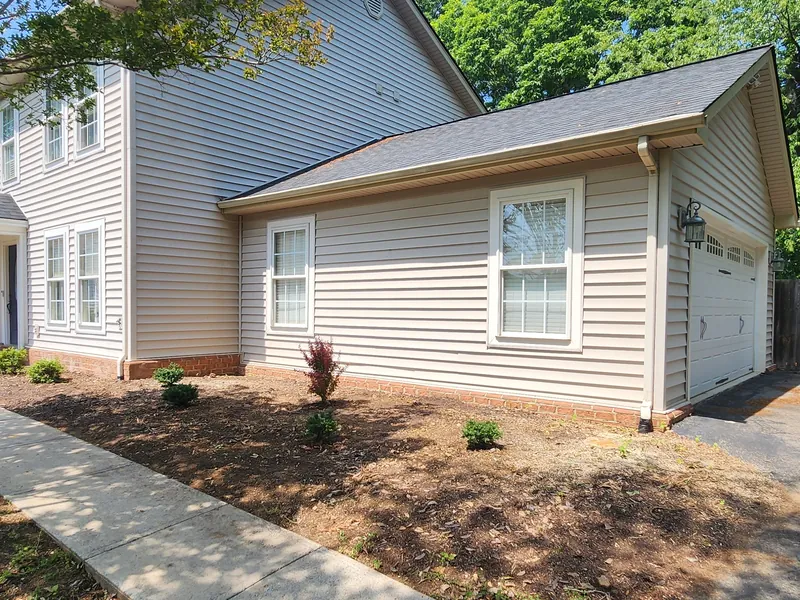
What we walked into
A bed that had outgrown itself
- Nandinas gone leggy and woody at the base
- Two holly trees grown up hard against the siding
- Low branches hanging into the bed and the walk
- Bare mulch where plants had been cut back and given up
- Nothing with a shape left to it
What went back in
Eleven plants, chosen on purpose
- Six reblooming dwarf azaleas — flower more than once a season
- Four soft touch holly — naturally round, low maintenance
- One orange rocket barberry as the centerpiece
- Spaced for mature size so the bed never crowds again
- Rounded habits, so almost no annual trimming
Before you commit
You see the design first.
Here is the rendering the bed was planted to, alongside how it actually went in. A bed that looks full on day one has been overplanted — and you pay for that in four years with a hedge trimmer.
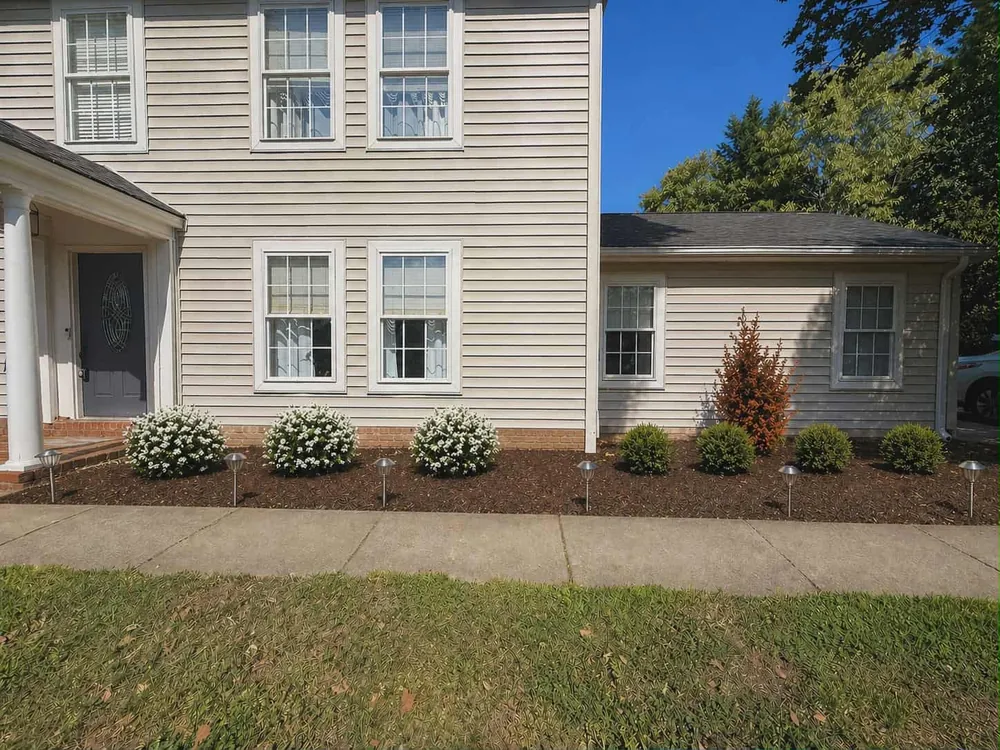
Start to finish
Eight photos, one bed.
Old nandinas and two holly trees out, low branches taken back, the bed stripped to bare soil and prepped, then eleven plants set to the plan. The homeowner laid the mulch themselves afterwards, which is a perfectly good way to save money on a job like this.
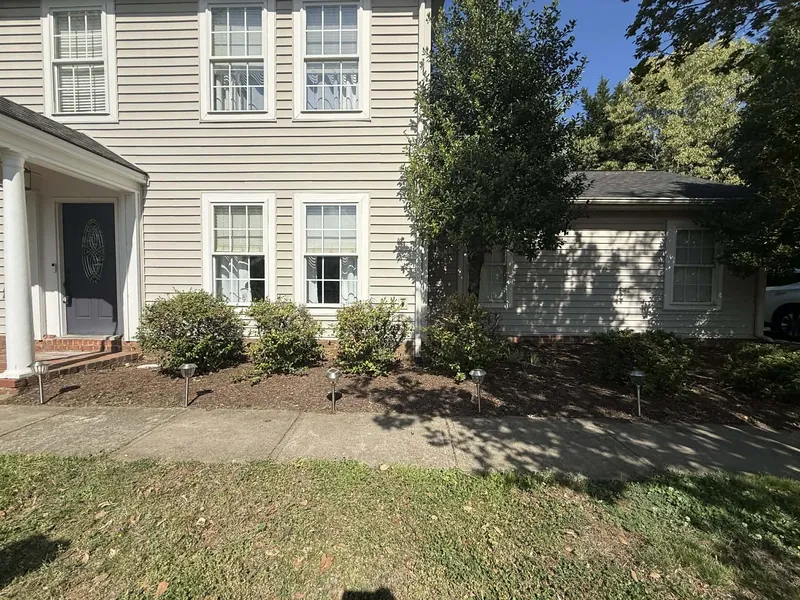 1 · Before
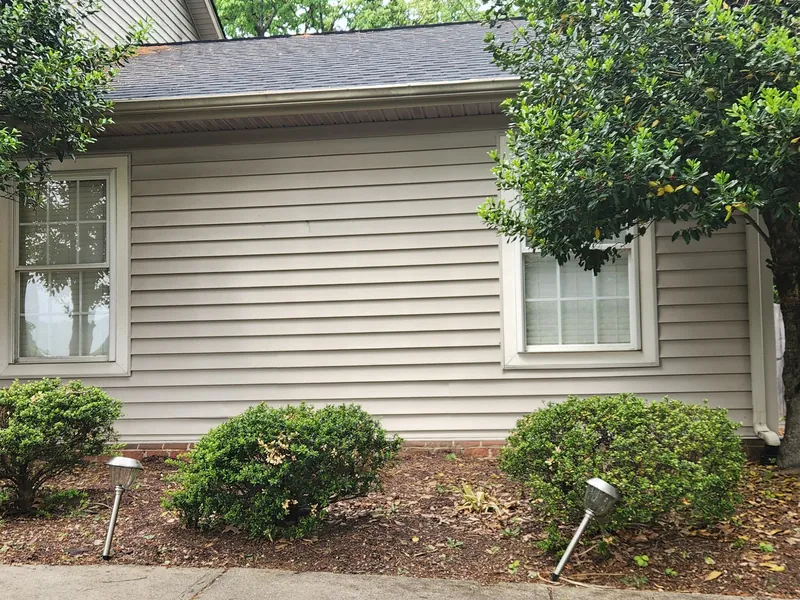 2 · Holly against the siding
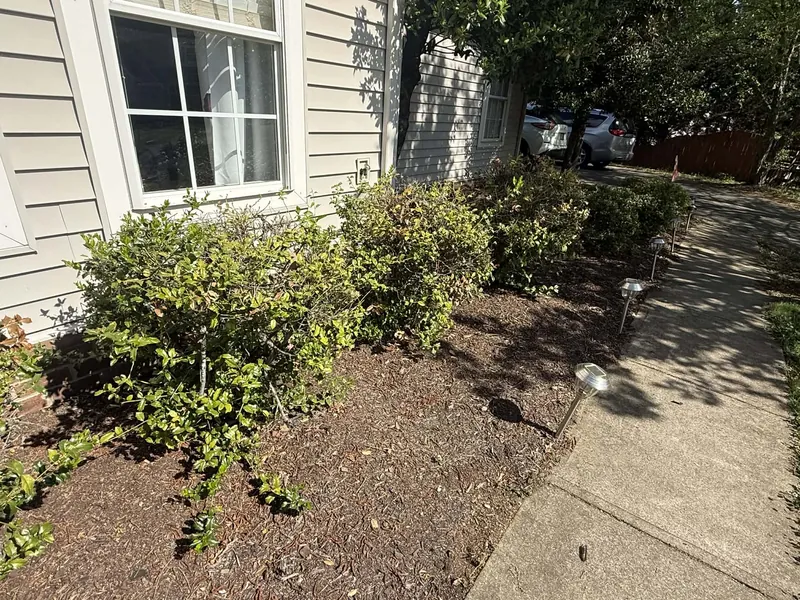 3 · Leggy and woody
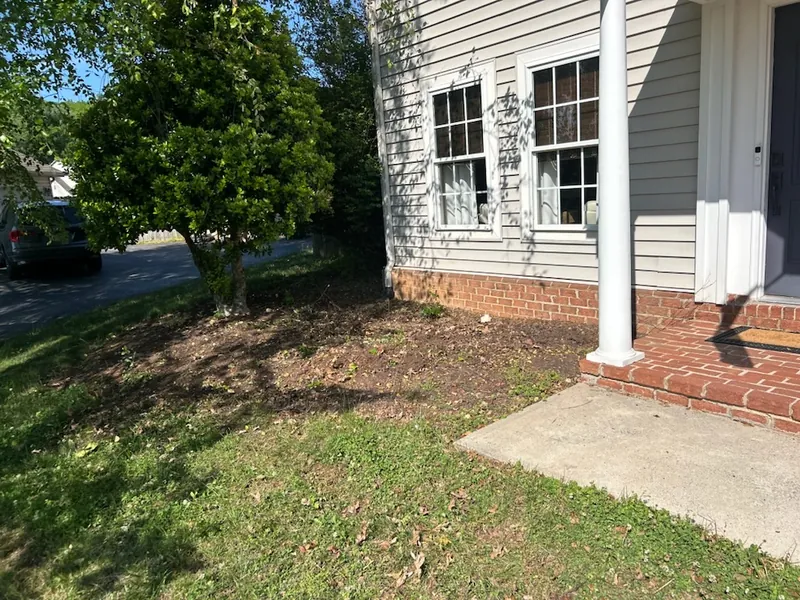 4 · During — cleared
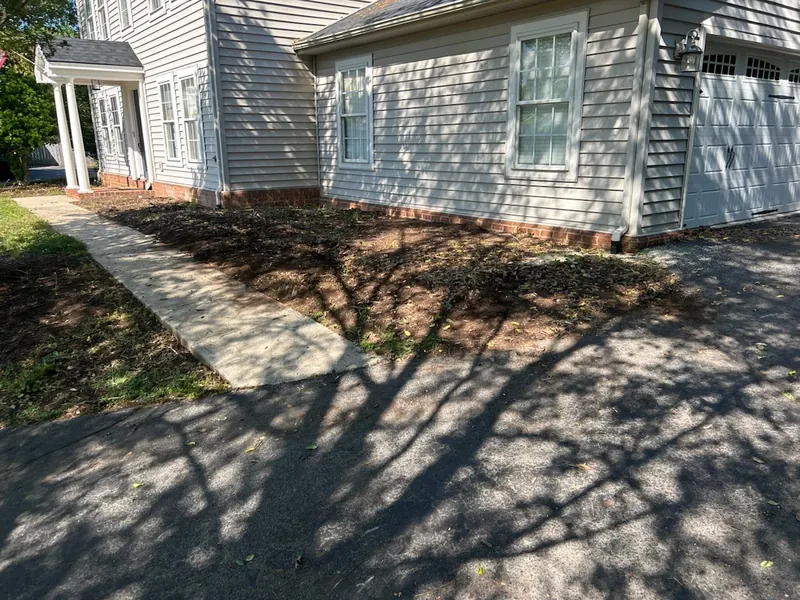 5 · During — prepped
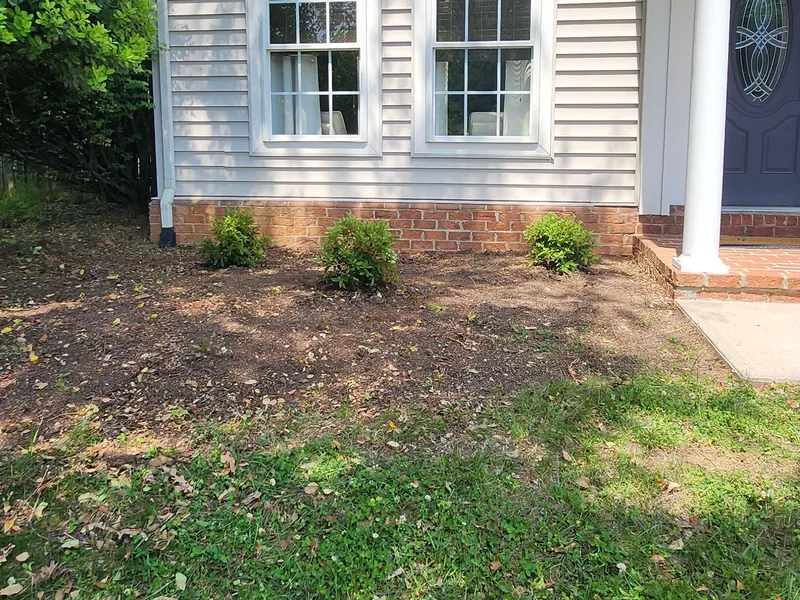 6 · After — azaleas in
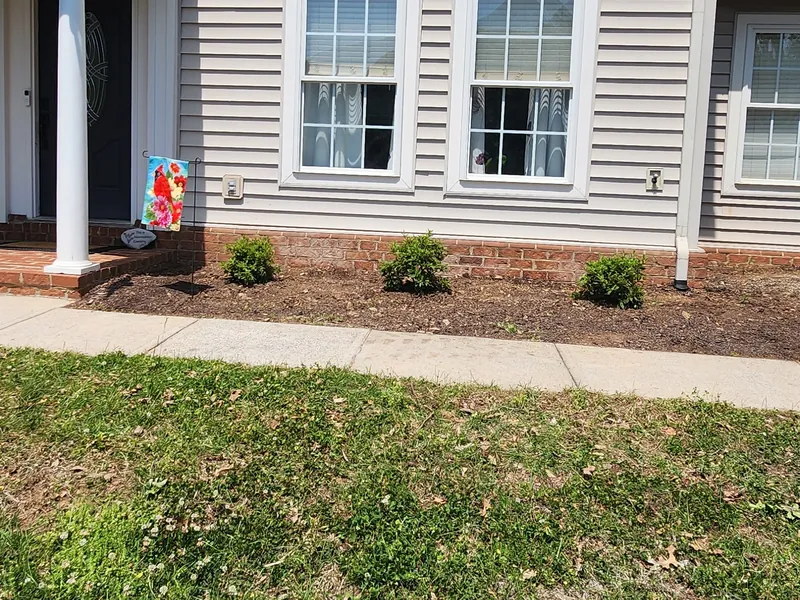 7 · After — front
8 · After — barberry centerpiece
7 · After — front
8 · After — barberry centerpiece
The process
How this one went.
Walked it and measured
What was worth keeping, what had to go, and how much room the bed actually had once the holly was out of the way.
Designed at mature size
The homeowner saw a rendering of the bed with the plants drawn at full size before anything came out of the ground.
Cleared and prepped
Nandinas and root balls out, two holly trees off the siding, low branches taken back, soil turned over and prepped.
Planted to the plan
Six reblooming dwarf azaleas, four soft touch holly, one orange rocket barberry — set at the spacing the design called for.
Before you call
Questions we get a lot.
Why do foundation beds end up overgrown?
Because most of them were planted for how they looked the day they went in. Shrubs get sold at nursery size, they go in close together so the bed looks full immediately, and eight years later they are into the siding and blocking the windows. It is a planting problem, not a trimming problem.
Do you show the design before you start?
Yes. We put together a rendering of the bed as it will look once the plants reach mature size, so you can see the spacing, the shapes and the colors before anything comes out of the ground. It is easier to move a shrub on a screen than after it is planted.
How long until a new bed looks like the design?
About a year for most shrubs, longer for anything meant to be a focal point. A bed that looks finished on day one has been overplanted, and you will be paying to cut it back within a few seasons.
Do you do the mulch as well?
We can, or you can do it yourself once the planting is in. Plenty of customers prefer to handle the mulch themselves and there is no reason not to.
More like this
Free estimate
Tell us where, and we'll take it from there.
- Most quotes come back the same day
- No pressure, no door-knocking follow-ups
- We price from your address, so you don't have to be home
Prefer to talk? (540) 815-9402
Request your free quote
Two minutes, and you don't need to be home for us to price it.