Landscaping in Vinton, VA
Color is the part most properties lose first. Pine straw grays out by midsummer, the lawn goes brown the moment it turns cold, and a bed that was sharp in April looks tired by August. None of that is inevitable.
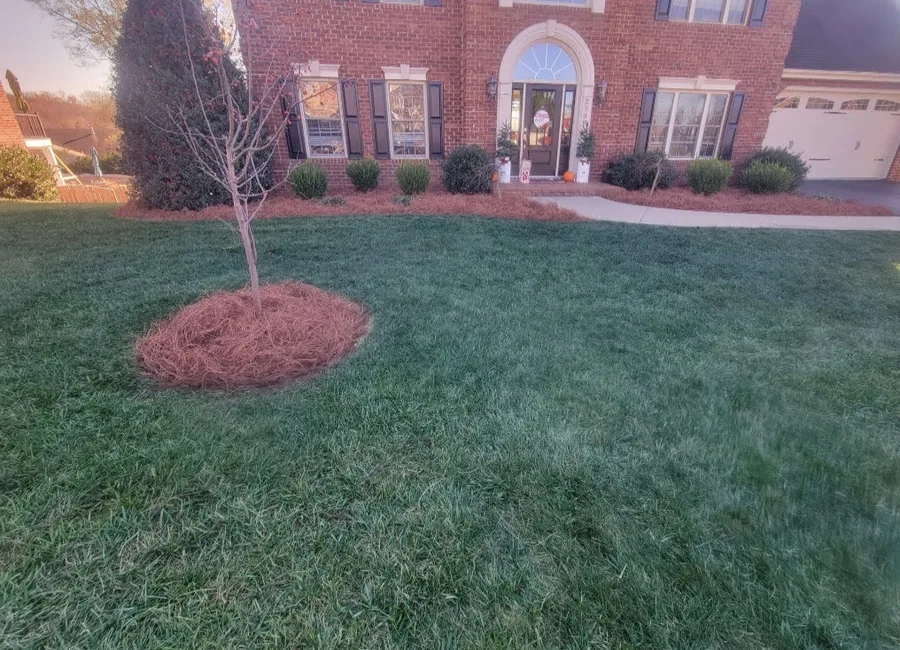
The photo is a lawn in Vinton in the middle of winter. The tree is bare. The grass is not.
The problem
Where the color goes
- Natural pine straw grays out within a couple of months
- Cool-season grass goes brown the moment it turns dormant
- Shrubs lose their shape and the beds stop reading as cared for
- A tree the dogs have stripped never recovers on its own
What we do about it
- Shrubs trimmed to shape every year, before the straw goes down
- Fresh pine straw laid, then dyed to hold color all season
- Turf dye on the dormant lawn — the product golf courses use
- Trees replaced properly, with watering bags and fencing to establish
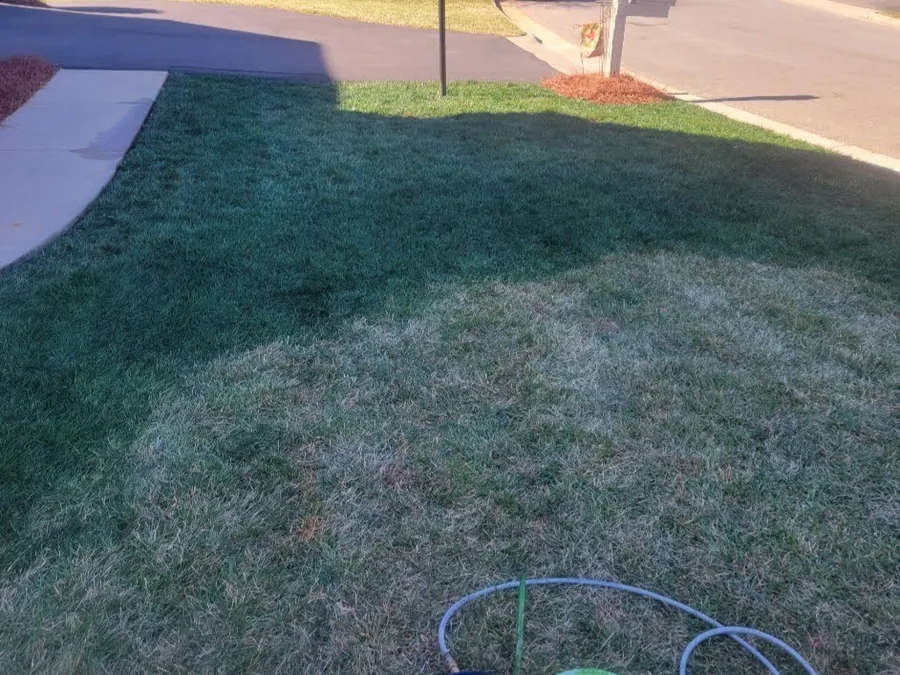
Winter turf dye
Green grass in January.
Dormant grass is not dead grass — it is asleep, and it stays brown until spring. Turf colorant is what golf courses spray to keep fairways green through the cold months, and it works exactly the same on a front lawn. One application carries the color through the winter.
Pine straw, dyed
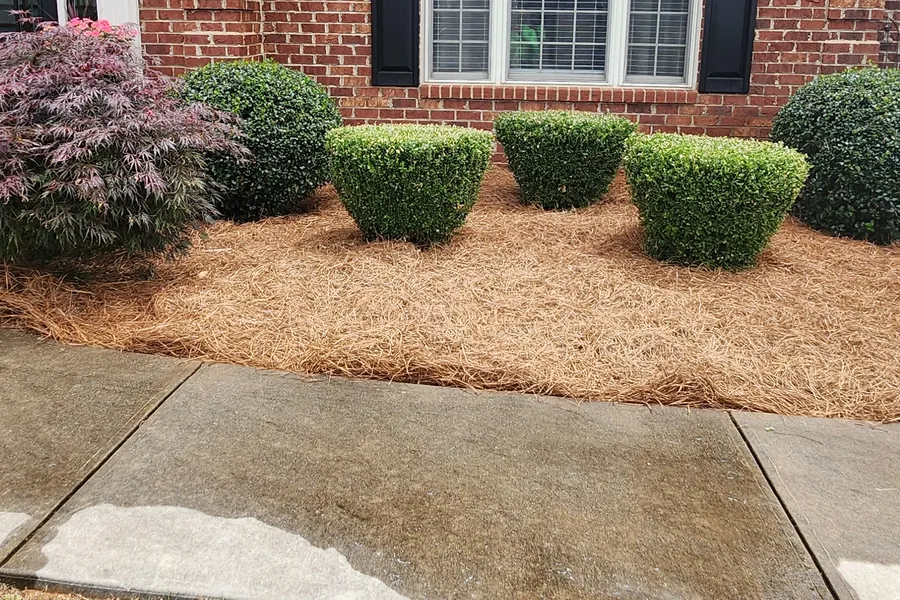
The same beds, two months apart.
Fresh straw goes down first, then the dye. Untreated straw fades toward gray and the bed stops looking finished. Dyed straw holds a deep color for the season, so you are paying for one installation rather than watching it wash out by July.
Tree replacement
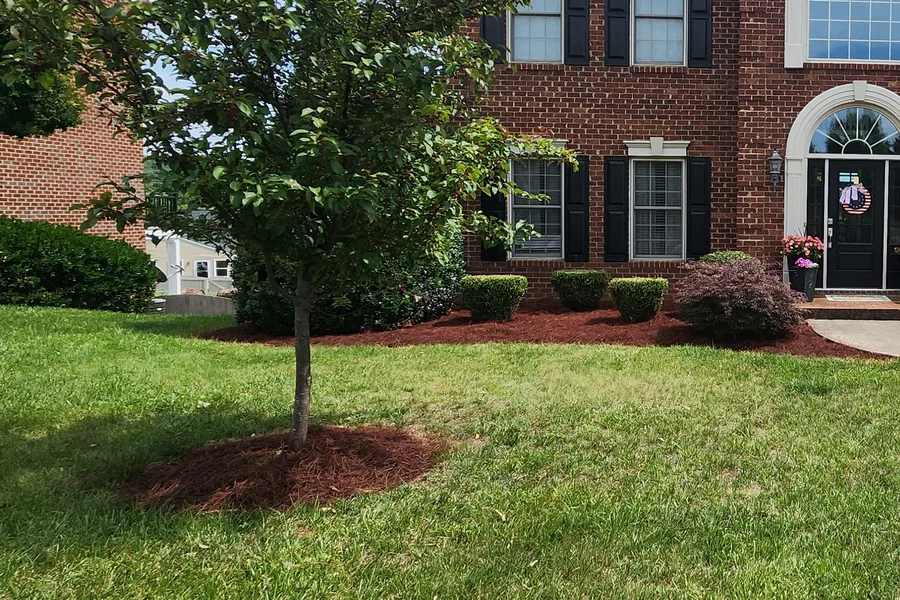
Two cherries out, two maples in.
The owner's dogs had stripped a pair of old ornamental cherries past saving. They came out and two 15-gallon maples went in. Each got a watering bag for its first year and low fencing around the base — not decoration, just enough to keep the dogs off until the roots take.
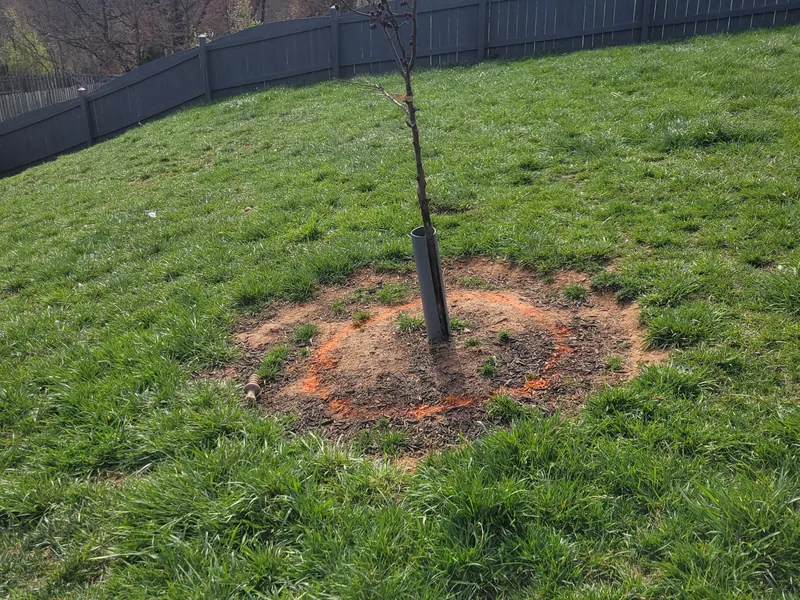 Before · cherry, marked
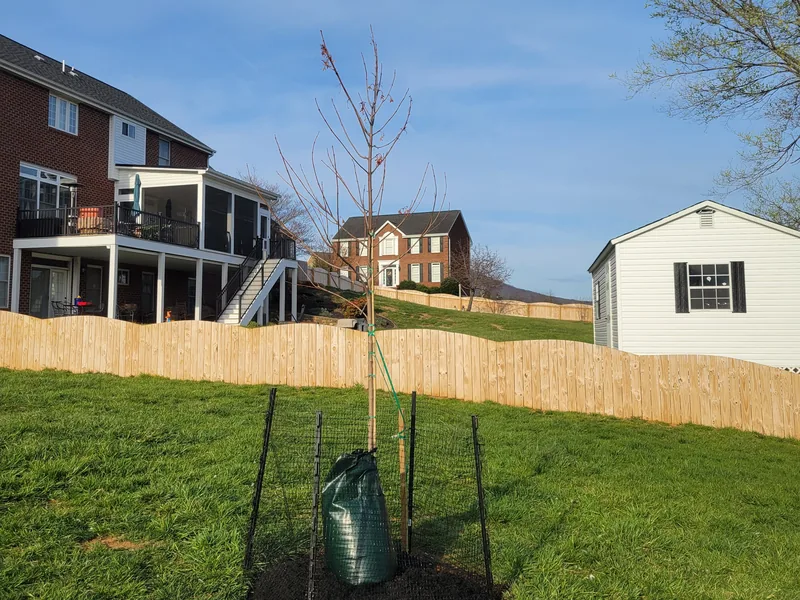 After · watering bag
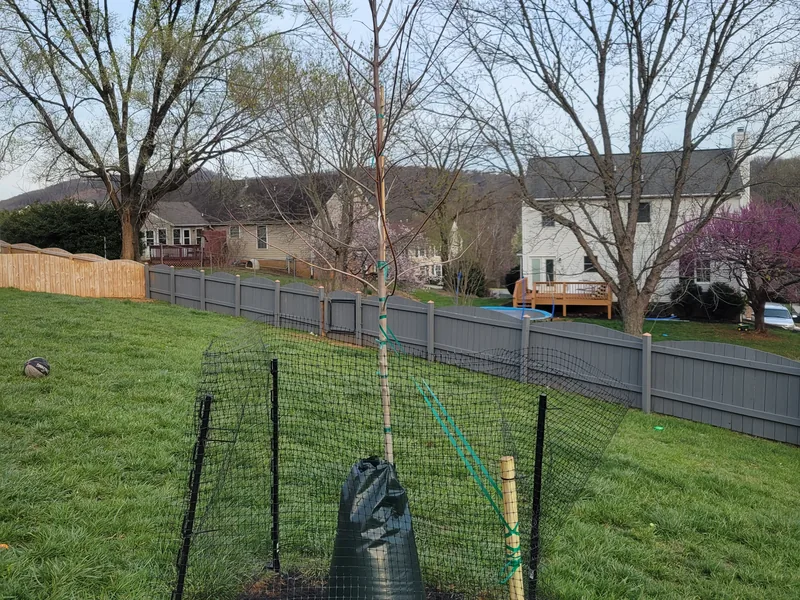 After · fenced to establish
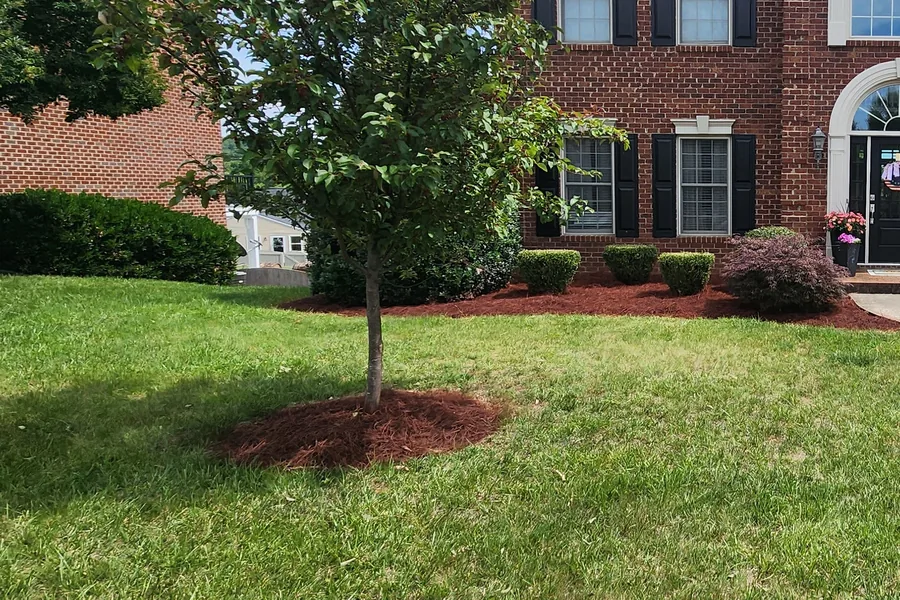 The property, kept
Through the year
What the cycle looks like.
Shrubs first
Everything shaped before any straw goes down, so clippings fall on bare bed rather than on fresh material we have just paid for.
Fresh pine straw
Laid across the beds at an even depth, tucked to the edges and around every plant.
Dye the straw
Sprayed to a deep, even color that holds through the season instead of graying out by July.
Turf dye in winter
Once the grass goes dormant and brown, the lawn gets the same treatment golf courses use — green through the cold months.
Before you call
Questions we get a lot.
What is winter turf dye?
A colorant sprayed onto dormant grass — the same kind of product golf courses use to keep fairways green through winter. Cool-season grass goes brown when it goes dormant. It is not dead, it is asleep, and the dye simply puts the color back until it wakes up in spring.
Is the dye safe for pets and children?
The turf products are made for golf courses that see foot traffic all winter. It dries onto the blade and is not a fertilizer or a pesticide. Give it a few hours to dry before anyone walks on it and it will not transfer.
Why dye pine straw instead of just replacing it?
We do both — fresh straw goes down first, then the dye. Natural pine straw fades to gray within a couple of months and the bed stops looking cared for. The dye holds a deep color for the whole season, so one installation lasts rather than looking tired by midsummer.
Can you replace a tree the dogs have killed?
Yes, and worth doing properly. On this property two ornamental cherries had been stripped by the owner's dogs. They went out and 15-gallon maples went in, each with a watering bag for the first year and low fencing around the base so the dogs leave them alone long enough to establish.
Related
Free estimate
Tell us where, and we'll take it from there.
- Most quotes come back the same day
- No pressure, no door-knocking follow-ups
- We price from your address, so you don't have to be home
Prefer to talk? (540) 815-9402
Request your free quote
Two minutes, and you don't need to be home for us to price it.